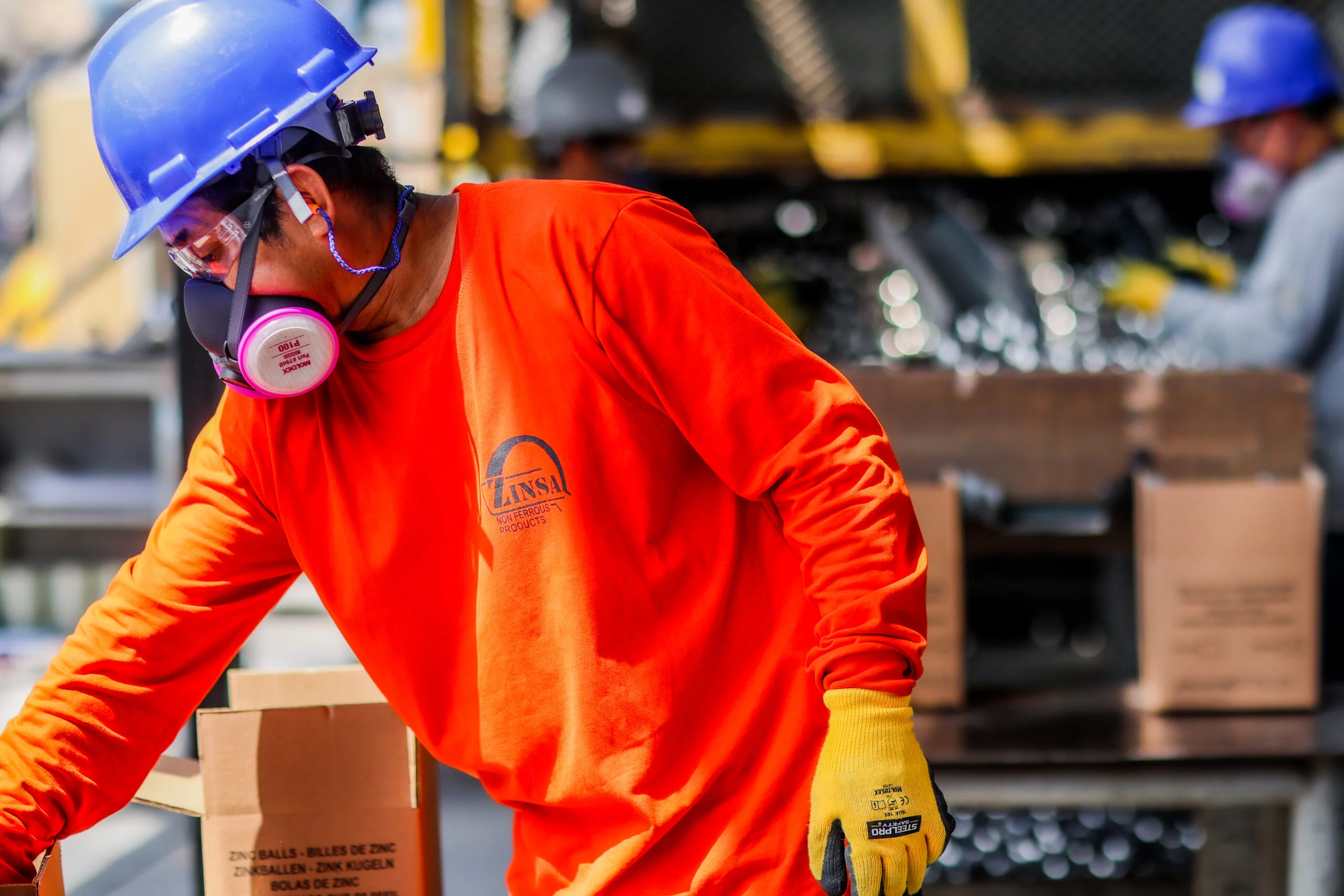
Their thermal, electrical, and insulating properties, along with their recyclability, make non-ferrous metals indispensable for certain industries, such as the automotive, maritime, aerospace, electrical, energy, pharmaceutical, and animal feed industries, among others.
Applications Across Multiple Industries
The most widely recognized non-ferrous metals are aluminum, tin, lead, copper, nickel, tin, manganese, and zinc.
Considering that it would not be appropriate to categorize all non-ferrous metals into a single group—since each one has different properties—it is necessary to highlight the benefits of those we consider most important.
Copper, a reddish metal, can be highly malleable and ductile when in a high-purity state. In addition, it has excellent electrical conductivity. This non-ferrous metal offers high resistance to corrosion under normal atmospheric conditions; however, when exposed to moisture, it turns a jade-green color, thereby protecting its surface. A clear example of this can be seen in the Statue of Liberty in New York City.
Zinc, from which our largest product portfolio is derived, is a bluish-white non-ferrous metal. At room temperature, it is brittle and resistant to corrosion under normal conditions. It may become dull in humid environments, forming a layer of basic zinc bicarbonates. Each zinc derivative has unique properties that make it indispensable for the following industries:









Contact Us
Please use the form if you have any questions or inquiries related to our products, services, or applications. We will reply within 24 hours, Monday to Friday.